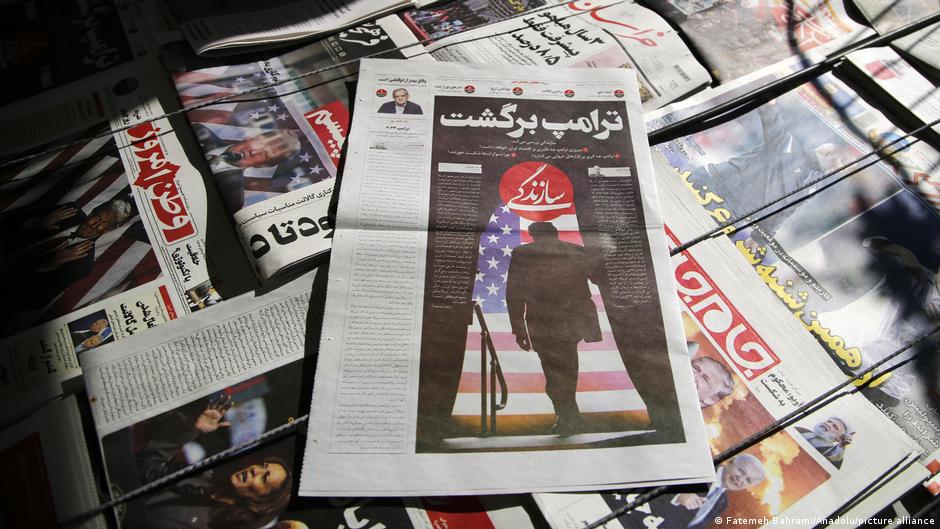
Trump's Ultimatum: Navigating the Perilous Brink
The geopolitical landscape surrounding Iran is once again at a boiling point, defined by a dangerous mix of external ultimatums and escalating internal dissent. At the heart of this intense pressure cooker is U.S. President Donald Trump, whose recent statements have drawn a stark line in the sand, threatening severe military action against Iran if specific demands are not met. This aggressive stance by the former president, coupled with his administration's broader efforts to support Iranian dissidents through technological means, paints a comprehensive picture of a nation under immense, multi-faceted pressure. The intersection of military threats concerning vital global trade routes and the ongoing digital battle for information freedom presents a complex and volatile scenario, with implications reverberating far beyond the Middle East. Understanding the nuances of these pressures, particularly the dynamic interplay between Trump Iran policy and the country's domestic struggles, is crucial for assessing potential future trajectories.
Trump's Ultimatum: A Brinkmanship Strategy with Global Stakes
President Donald Trump's recent pronouncements have thrust the U.S. and Iran onto a perilous edge, reminiscent of Cold War-era brinkmanship. His blunt warning on Monday, reiterated from the White House, made it unequivocally clear: a failure by Iran to reach an agreement on reopening the strategically vital Strait of Hormuz by Tuesday evening would invite devastating consequences. "The entire country can be taken out in one night, and that night might be tomorrow night," Trump declared, underscoring the gravity of his ultimatum. This stark rhetoric signals a zero-tolerance approach, leaving little room for misinterpretation of the potential for military intervention.
The Strait of Hormuz, a narrow waterway connecting the Persian Gulf to the open sea, is one of the world's most critical chokepoints for oil transit, with an estimated 20% of global petroleum consumption passing through it daily. Any significant disruption here could send shockwaves through the global economy, causing oil prices to skyrocket and impacting countless industries worldwide. Iran's perceived threats to this crucial artery have consistently been a flashpoint for international concern, particularly for nations dependent on stable energy supplies.
In response to the escalating tensions, a Pakistan-backed ceasefire proposal was reportedly rejected by Iran, which instead issued a 10-point counterproposal. While President Trump acknowledged this counteroffer as "very significant," he quickly dismissed it as "not good enough," indicating a substantial gap between the two sides' negotiating positions. This rejection highlights the deep distrust and seemingly intractable nature of the current deadlock. The situation is further complicated by past incidents, such as the harrowing rescue of two U.S. airmen from Iran following a downed fighter jet, an operation that reportedly involved a sophisticated CIA deception campaign. Such events underscore the covert and overt layers of conflict that characterize the complex relationship between the U.S. and Iran, with Trump Iran relations often defined by high-stakes confrontations rather than diplomatic breakthroughs. The looming deadline and the President's severe warnings have cast a long shadow, demanding immediate global attention to avert a potential full-scale military conflict.
The Digital Battleground: Starlink and Iranian Dissidence
Beyond the immediate military threat, Iran faces another profound challenge: an internal struggle for information freedom, significantly impacted by the U.S.'s technological support for dissidents. This digital battleground received significant attention with President Trump's January 2026 announcement of his intention to consult with Elon Musk regarding the deployment of SpaceX's Starlink satellite constellation in Iran. The objective is clear: to restore internet access, circumventing a government-enforced nationwide blackout during widespread anti-regime protests. This initiative builds on a crucial precedent set during the 2022 protests, sparked by the tragic death of Mahsa Amini, where Starlink proved instrumental in allowing protesters to bypass severe internet restrictions, despite lacking official regulatory approval within Iran.
The 2022 protests, ignited by the death of Mahsa Amini, a 22-year-old Kurdish woman, in the custody of Iran's morality police for allegedly violating hijab regulations, rapidly escalated into one of the most significant challenges to the Islamic Republic's authority since the 1979 revolution. Under the rallying cry of "Woman, Life, Freedom," demonstrations spread across major cities, fueled by long-standing grievances over gender discrimination and authoritarian control. The Iranian government responded with brutal force, deploying Basij paramilitary forces and regular security personnel, resulting in violent clashes, widespread arrests (estimated over 20,000), and even executions like that of Mohsen Shekari for "enmity against God."
Amidst this escalating violence, Iran imposed a near-total internet blackout starting in late September 2022. This severe restriction, aimed at isolating protesters and limiting information flow, saw foreign platforms blocked, domestic connectivity throttled, and mobile data and international bandwidth curtailed. Such shutdowns, justified by authorities as measures to prevent "riots" and foreign interference, are emblematic of modern authoritarian regimes' tactics to control narratives and suppress dissent. However, the proposed Starlink deployment offers a powerful counter-measure, leveraging low-Earth orbit connectivity to create an independent channel for information. Elon Musk has consistently endorsed such access for Iranians, highlighting Starlink's potential as a vital tool for information flow in geopolitically restricted environments. For deeper insights into these efforts, explore articles on Trump-Musk Starlink: Restoring Iran's Internet Amid Protests and Bypassing Censorship: Trump's Starlink Push for Iran's Dissidents. The U.S. efforts to support dissidents through independent connectivity, even as Iranian authorities reportedly employ advanced jamming techniques, underscore the critical role of technology in contemporary struggles for human rights and political freedom, adding another layer to the complex dynamic of Trump Iran relations.
The Strategic Value of Digital Resilience
The emphasis on Starlink for Iran transcends mere technical assistance; it represents a strategic pivot in how external powers can influence internal political dynamics within authoritarian states. By enabling access to uncensored information and communication, satellite internet services like Starlink provide a lifeline for movements like "Woman, Life, Freedom," allowing them to coordinate, share real-time abuses with the world, and counter state propaganda. This approach weaponizes information, turning it into a tool for empowerment rather than just a commodity. The ability to bypass traditional, state-controlled internet infrastructure directly challenges the regime's most effective tools of suppression – censorship and isolation. It highlights a critical aspect of modern geopolitical strategy: the battle for hearts and minds is increasingly fought in the digital realm, with connectivity becoming as vital as conventional military might. Practical insights for activists and concerned citizens often revolve around understanding how to leverage and support these independent networks, emphasizing the importance of securing equipment and protecting user anonymity against sophisticated surveillance and jamming technologies, potentially aided by foreign expertise.
Analyzing the Dual Pressures and Future Scenarios
Iran finds itself at an unprecedented crossroads, simultaneously facing severe external military threats from President Trump and profound internal pressures for change, amplified by global technological initiatives. This dual pressure creates a highly volatile and unpredictable environment. Externally, the ultimatum regarding the Strait of Hormuz puts the regime in a precarious position. Acquiescing to Trump's demands might be seen as a sign of weakness internally, while refusal risks devastating military action. The potential for miscalculation is immense, where a seemingly minor incident could rapidly escalate into a regional, or even global, conflict.
Internally, the ghost of the Mahsa Amini protests and the enduring "Woman, Life, Freedom" movement continues to challenge the regime's legitimacy. The prospect of renewed Starlink deployments, potentially championed by a future Trump administration, offers Iranian citizens a powerful tool to circumvent state censorship and sustain their protests. This digital lifeline empowers dissidents and complicates the regime's efforts to control information and suppress unrest. The Iranian government's challenge is two-fold: how to maintain its authority and narrative control when its citizens have direct access to global information networks, and how to effectively counter external military threats without further alienating an already restive population.
Future scenarios are varied and fraught with uncertainty. One possibility is a tense standoff, where rhetorical threats continue but military action is narrowly averted, potentially through last-minute diplomatic maneuvers or de-escalatory steps by both sides, albeit with the "not good enough" sentiment from Trump hanging heavy. Another, more dangerous path, is direct military confrontation, particularly if the Strait of Hormuz becomes a flashpoint. Such a scenario would undoubtedly exacerbate internal unrest, potentially leading to a more widespread humanitarian crisis and further destabilizing the region. Finally, there's the long-term prospect of sustained internal pressure, empowered by technology, slowly eroding the regime's control from within. For analysts, it's crucial to recognize that these pressures are interconnected; a military strike could inadvertently fuel internal dissent, just as successful internal dissent could provoke a stronger external response. The complex interplay of military might, economic leverage, and information warfare defines the current Trump Iran dynamic, making it one of the most critical geopolitical challenges of our time.
Conclusion
The current situation in Iran is a stark reminder of the complex interplay between international politics, military strategy, and the fight for human rights. President Trump's explicit ultimatum and the looming threat of military action underscore the profound external pressures on the Iranian regime, particularly concerning vital global trade routes. Simultaneously, the internal landscape is volatile, marked by widespread anti-regime protests and a desperate struggle for information freedom, a struggle increasingly influenced by proposals like the Trump-Musk Starlink initiative. This dual pressure – from the barrel of a gun and the promise of open internet – places Iran at a critical juncture. The decisions made in the coming days and weeks, whether by Tehran in response to diplomatic overtures or by Washington in escalating its demands, will have far-reaching consequences, not only for the Iranian people but for regional stability and global energy markets. The trajectory of Trump Iran relations remains highly unpredictable, demanding vigilant observation and a nuanced understanding of the forces at play.